Early 1990s
The first Somaliland families arrive in Columbus.
Families displaced by the war of liberation resettle in central Ohio, drawn by welcoming neighborhoods, affordable housing, and the promise of stable work.
Photo slot
Our community's three decades in Ohio, and the homeland that shaped us.
Three decades of Somaliland families arriving in Ohio, building a community one gathering at a time, and turning quiet work into the Somaliland Ohio Association.
Families displaced by the war of liberation resettle in central Ohio, drawn by welcoming neighborhoods, affordable housing, and the promise of stable work.
Somaliland households take root in Cleveland, Cincinnati, Dayton, and the Columbus suburbs. Kids grow up bilingual. Elders build relationships with local mosques, city halls, and school districts.
Informal committees form to coordinate Independence Day celebrations, mutual aid, and family support. A younger generation raised in Ohio steps into leadership beside the elders who built the foundation.
Long before there was a nonprofit, the founders of what would become SOA hosted picnics, cultural nights, career workshops, etc. All volunteer run, all funded by the community itself.
After three decades of community work, the founders establish SOA as a nonprofit so the mission can outlast any single volunteer, unlock partnerships with employers and grantors, and be accountable to the families it serves.
SOA is standing up its first two flagship programs, Somalilanders in Tech and Somalilanders in Health. Both pair mentorship, certification study groups, and community health education with a professional network built for the long run. Founding members and mentors are shaping both from day one.
Three generations, one story. Real testimonials will replace these placeholders.
"When we came here in the 90s, we barely knew anyone. Thirty years later, my grandchildren are Ohioans. This place became home."
"Raising my kids between two cultures is not easy, but I never do it alone. That's what SOA has always been.. someone always answers the phone."
"I was born here, but I know exactly where I come from because the elders made sure of it. Now it's our turn to give back."
You can't understand our community without understanding where we come from.
A factual overview for partners, grantors, and neighbors. Every date and figure drawn from public historical sources.
On June 26, 1960, the British Somaliland Protectorate became the sovereign State of Somaliland, recognized by 35 countries including all five permanent UN Security Council members. Five days later, Somaliland voluntarily joined the former Italian Somaliland to form the Somali Republic.
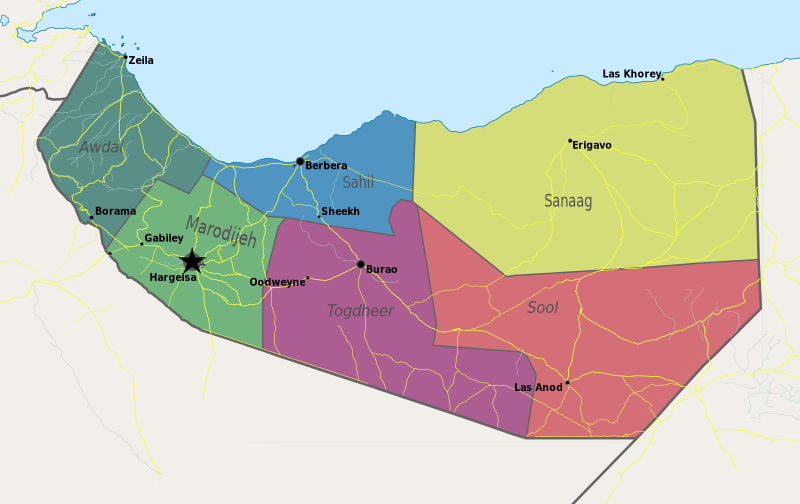
Following decades of centralization and repression under the Siad Barre regime, the Somali National Movement launched a full liberation campaign in 1988. Aerial bombardment destroyed Hargeisa and Burao, with independent estimates of 50,000 to 200,000 civilian deaths. On May 18, 1991, at the Burao Grand Conference, Somaliland formally withdrew from the union and reclaimed the sovereignty it had held on June 26, 1960.
Elder led clan conferences, most notably Borama in 1993, disarmed militias and produced a hybrid government blending traditional authority with modern institutions. A constitution was approved by referendum in 2001 with 97% support. Somaliland has since held multiple presidential, parliamentary, and municipal elections, with peaceful transfers of power between parties, including the 2024 election in which the sitting president conceded to the opposition on election night.
A concession with DP World has expanded the Port of Berbera on the Gulf of Aden with new container terminals and a corridor road linking landlocked Ethiopia to global shipping lanes. Berbera is now one of the most active commercial ports on the Red Sea.
On December 26, 2025, the State of Israel formally recognized the Republic of Somaliland, becoming the first UN member state to establish full diplomatic relations after 34 years without formal recognition from any UN member state.
Somaliland governs itself with its own currency, borders, elections, army, and coast guard, and maintains cooperative security relationships with several Western partners. It continues to seek broader diplomatic recognition while deepening trade, education, and development ties abroad.
Berbera is Somaliland's deepwater gateway on the Gulf of Aden, a short sail from Bab-el-Mandeb, one of the world's busiest shipping chokepoints. A multi-year partnership with DP World has expanded Berbera into a modern container port with new terminals, an expanded free zone, and a highway corridor linking it to Ethiopia's 120 million consumers.
Israel became the first UN member state to formally recognize the Republic of Somaliland after 34 years without formal recognition.
Ohio built our future. Somaliland gave us our beginning. Reach out and help write the next chapter with us.